
Why Productivity Might Be Your Most Important Leadership Skill Right Now
Twenty years ago, a leader’s biggest obstacle to clear thinking was a full inbox and a ringing phone. Today it’s an AI assistant drafting emails while three messaging apps ping, a social feed refreshing itself, and a calendar stacked with meetings that could have been a message. The tools have multiplied. The time to think has not.
This is the paradox at the centre of modern leadership: we have never had more technology designed to make us efficient, and leaders have never found it harder to concentrate on what actually matters. The result is a generation of capable people spending their days reactive instead of directive, answering instead of deciding, responding instead of leading.
Productivity, in this context, stops being an administrative nice-to-have. It becomes the operating system for leadership itself.
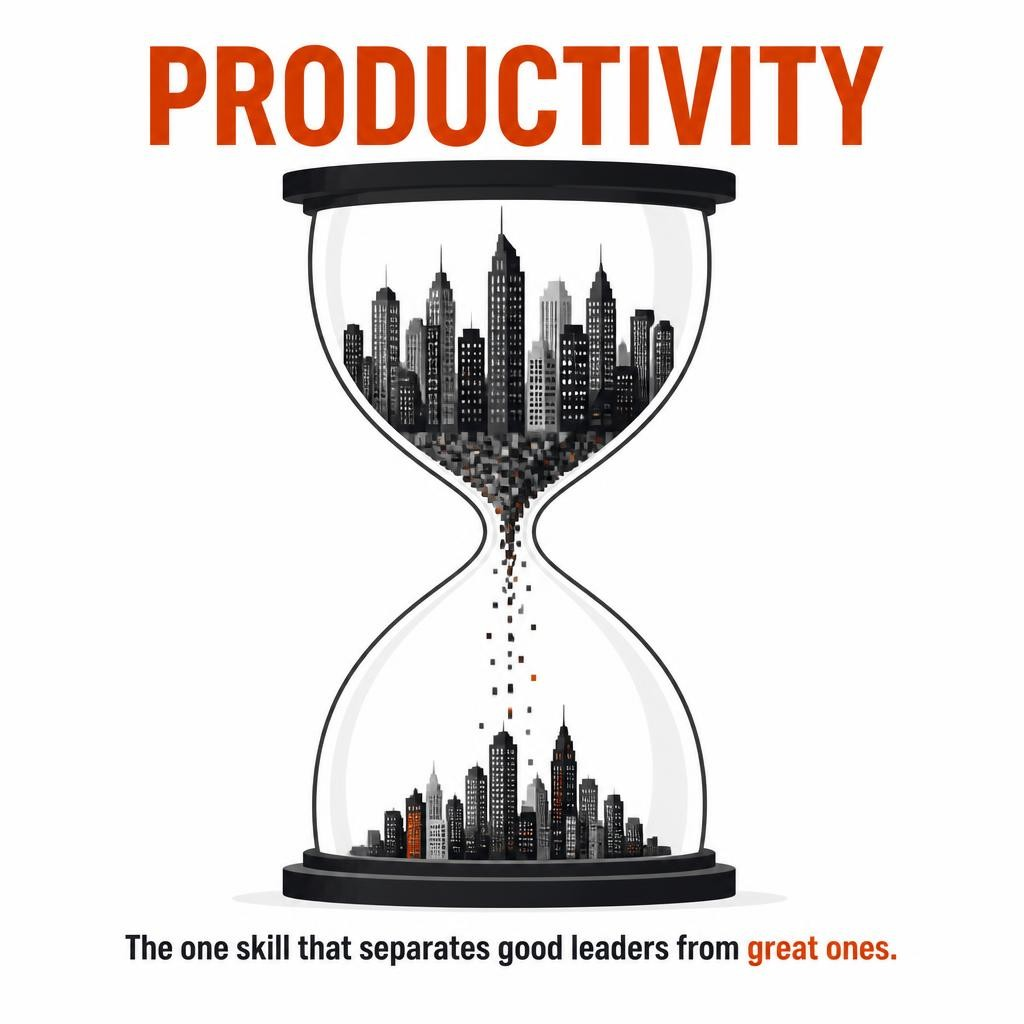
The Cost of Constant Availability
Every notification is a small tax on attention. Individually, they cost seconds. Collectively, across a working day saturated with Slack threads, AI-generated summaries, LinkedIn updates, and calendar invites, they cost something far more valuable: the sustained, uninterrupted thinking that good leadership actually requires.
Strategic decisions, difficult conversations, and long-term planning don’t happen in the gaps between pings. They happen in blocks of protected, focused time, which is the very thing that’s disappeared from most leaders’ calendars. When a leader can’t concentrate, the organisation feels it: decisions get made on partial information, priorities blur, and the loudest signal in the inbox starts dictating the day instead of the leader’s own judgement.
Why This Makes Productivity a Leadership Skill, Not a Personal Habit
It’s tempting to file time management, organisation, and focus under “personal efficiency” – useful, but secondary to the real work of leading people and setting direction. That framing no longer holds.
Time management determines whether a leader spends their week on the two or three decisions only they can make, or gets consumed by work anyone could do.
Organisation is what allows a leader to hold the full picture of a business in their head without every thread feeling like a fire.
Prioritisation is the skill that separates urgent from important, a distinction technology actively works against, since everything is designed to feel urgent.
Concentration is what makes deep, high-quality thinking possible at all in an environment engineered for interruption.
And communication – clear, deliberate, and not just reactive – is what stops the noise from technology being replaced by noise from the leader themselves, adding to the pile rather than cutting through it.
Put together, these aren’t soft skills sitting alongside leadership. They are the mechanism by which leadership happens in a distracted world.
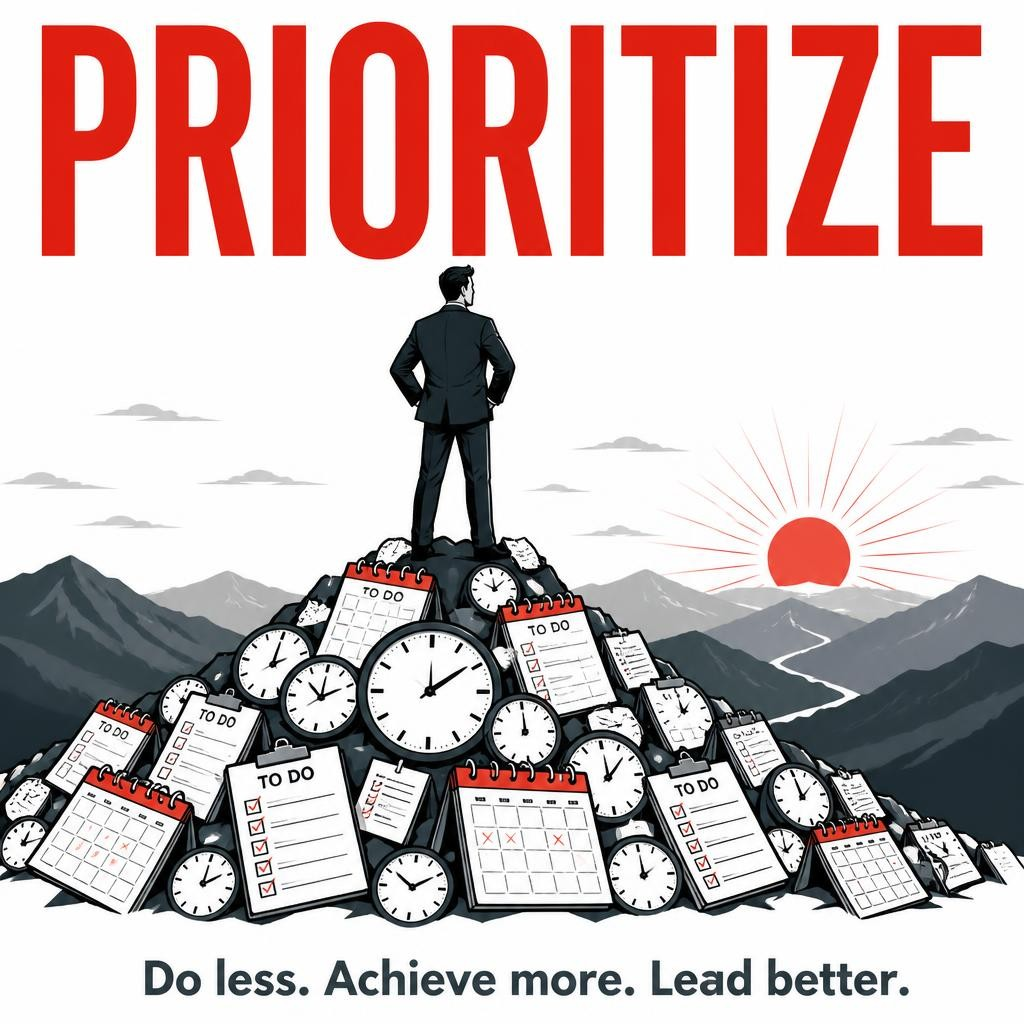
Leading Through the Noise, Not Around It
None of this means rejecting technology. AI tools, in particular, can free up enormous amounts of time when used well. The difference is intentionality. Leaders who thrive aren’t the ones who’ve eliminated technology from their day; they’re the ones who’ve decided what deserves their attention and built the habits to protect it.
That might look like:
– Batching, not reacting. Checking messages at set points rather than the moment they arrive, so communication happens on the leader’s terms, not the app’s.
– Protecting thinking time like a meeting. Blocking calendar space for the work that requires concentration, and treating it with the same non-negotiable status as a client call.
– Ruthless prioritisation. Regularly asking not “what’s urgent” but “what matters” and having the discipline to let the former wait.
– Delegating the noise. Using organisational systems and, increasingly, AI tools to filter and triage, so human attention is spent only where judgement is genuinely needed.
– Communicating with intent. Fewer, clearer messages instead of a constant stream — modelling the kind of focus a leader wants to see in their team.
The Bottom Line
The onslaught of technology isn’t going to slow down. If anything, the volume of inputs competing for a leader’s attention will keep growing. Which means the leaders who stand out won’t be the ones with the most tools or the fastest response times; they’ll be the ones who’ve mastered the increasingly rare skill of deciding where their attention goes.
Productivity, in this sense, isn’t about doing more. It’s about protecting the space to lead at all.