
Blind Spots and Hidden Strengths: What Every Leader Can’t See (and Why It Costs You Talent)
Leadership is shaped by more than what you intend to do. It is also shaped by how other people experience you.
A leader may believe they are giving their team freedom, while colleagues experience a lack of direction. They may think they are maintaining high standards, while direct reports experience constant criticism. Equally, they may underestimate their ability to inspire, coach or bring calm to difficult situations.
These gaps between intention and impact can be costly. They can weaken relationships, reduce productivity, discourage honest communication and cause talented people to look elsewhere.
The challenge is that leaders cannot see every aspect of their own behaviour. This is where the Johari Window provides a useful framework.
What is the Johari Window?
The Johari Window is a model of self-awareness and interpersonal relationships. It divides personal knowledge into four areas:
- The open area: behaviours and qualities known both to you and to others
- The blind spot: behaviours and qualities others can see, but you cannot see in yourself
- The hidden area: things you know about yourself but do not share with others
- The unknown area: potential qualities or behaviours not yet recognised by you or others
For leaders, the blind spot is particularly important. It contains the habits, behaviours and impact that are visible to the people around you, but not necessarily to you.
Blind spots are not always weaknesses. They can also include positive qualities that others recognise before you do. A team might see you as a highly capable coach, thoughtful decision-maker or reassuring presence, even if you view these qualities as ordinary.
This is why leadership feedback should identify both risks and strengths.

The cost of leadership blind spots
1. Relationships become harder than they need to be
Strong leadership depends on trust, clarity and mutual respect. A blind spot in any of these areas can create unnecessary friction.
For example, a leader who regularly interrupts may believe they are being engaged and decisive. The team, however, may conclude that their views are not valued. A leader who avoids difficult conversations may think they are protecting relationships, while employees experience uncertainty or a lack of accountability.
Over time, these small moments shape how people feel about working with their leader.
The most damaging issue is often not the behaviour itself, but the absence of awareness. If a leader does not know how their actions are being received, they cannot make a deliberate adjustment.
2. Productivity suffers beneath the surface
Productivity is not simply a matter of processes, technology or workload. It is also influenced by the quality of leadership around the work.
When expectations are unclear, people spend time second-guessing decisions. When a leader changes direction without explanation, employees may redo work or delay action. When every decision has to be approved at the top, capable people stop using their initiative.
A leader may see themselves as involved and supportive. Their team may experience the same behaviour as micromanagement.
Similarly, a leader who is highly strategic may spend less time explaining practical priorities. They may assume that everyone understands the wider direction, while the team is left unsure about what matters most this week.
Feedback helps reveal these differences between a leader’s intention and the team’s experience.
3. Key people may become disengaged
Talented employees want more than a salary. They want to feel trusted, respected and able to contribute meaningfully.
When leaders fail to recognise their own blind spots, they may unintentionally create an environment where people hold back. Employees might stop sharing ideas because previous suggestions were dismissed. They may avoid raising concerns because the leader reacts defensively. Or they may feel overlooked when opportunities and recognition appear to go to the same individuals.
These experiences are not always dramatic enough to trigger an immediate resignation. More often, engagement declines gradually.
The employee does only what is necessary. They stop volunteering for additional responsibility. They become less open in meetings. Eventually, a competitor offering a more supportive environment becomes difficult to resist.
Leadership blind spots can therefore contribute to the loss of key staff long before an exit interview reveals what went wrong.
4. Opportunities are missed
Blind spots can limit a leader’s view of the organisation as well as their view of themselves.
A leader who values speed may overlook valuable perspectives from colleagues who need time to analyse an issue. A leader who relies on established methods may dismiss new ideas too quickly. A leader who is confident in their own expertise may fail to notice that someone else has a better solution.
Hidden strengths can be missed in the same way.
A quiet team member may have exceptional strategic thinking. A technically focused employee may be a natural mentor. Someone who does not seek attention may have the trust of colleagues across the organisation.
If leaders only recognise the strengths that look familiar to them, they can overlook capability that is already present in the team.
What got you here may not get you there
Marshall Goldsmith’s well-known observation is especially relevant to leadership development:
“What got you here won’t get you there.”
The behaviours that helped someone become successful may not be the behaviours required for their next stage of leadership.
A leader may have progressed because they were the fastest problem-solver in the room. As their responsibilities grow, however, their role may depend less on solving every problem personally and more on developing the people around them.
A direct, forceful style may have helped them establish credibility early in their career. Later, the same style may discourage challenge and limit collaboration.
This does not mean leaders should discard their strengths. It means they need accurate information about when those strengths help, when they create unintended consequences and which capabilities need to develop next.
Why solid data matters
Leadership feedback can be uncomfortable, but vague feedback is rarely useful.
Comments such as “communicate better” or “be more strategic” do not provide enough information to guide meaningful change. Leaders need to understand the behaviours behind the feedback, the difference between self-perception and others’ experience, and the situations in which a particular pattern appears.
A structured 360 assessment creates a more reliable picture by gathering feedback from multiple perspectives. This reduces the risk of relying on one person’s opinion or on a leader’s own assumptions.
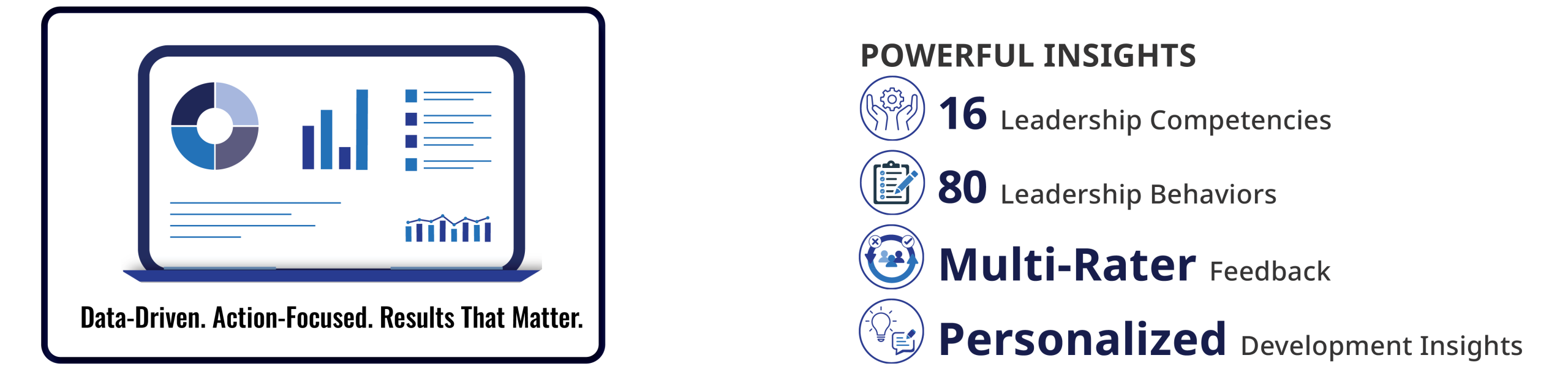
The LMI-UK Total Leader 360 assessment combines:
- Self-assessment
- Feedback from managers
- Feedback from peers
- Feedback from direct reports
- 16 leadership competencies
- 80 leadership behaviours
This provides a detailed view of how a leader approaches personal productivity, personal leadership, motivational leadership and strategic leadership.
The value is not simply in receiving a score. It is in seeing patterns.
Perhaps a leader rates themselves highly in listening, while their team’s feedback suggests that they listen well in one-to-one conversations but become less receptive under pressure. Perhaps a leader identifies delegation as a strength, while colleagues consistently highlight their ability to create psychological safety. Perhaps the assessment confirms a development need that the leader had sensed but not yet defined.
Good data turns a general feeling into a practical starting point.
Turning insight into measurable growth
Feedback only creates value when it leads to action.
That is why the Total Leader 360 includes an Interpretation and Feedback Session. This gives leaders the opportunity to understand their results, explore the themes behind the data and decide what to do next.
A useful personal development plan might focus on:
- One blind spot that is affecting relationships or performance
- One hidden strength to use more deliberately
- One leadership behaviour to practise in a specific situation
- One way to invite ongoing feedback from the team
- A method for tracking progress over time
This approach supports measurable growth rather than a short-lived moment of self-reflection.
It can also strengthen emotional intelligence. Leaders become more aware of their emotions, reactions and impact on others. They can pause before responding, ask better questions and adapt their approach to the needs of the situation.
When leaders demonstrate that they can receive feedback without becoming defensive, the wider team benefits too. It becomes easier for employees to speak honestly, raise concerns early and contribute ideas. That helps create psychological safety, stronger engagement and more productive relationships.
The goal is not perfection
No leader will eliminate every blind spot. Leadership takes place in changing circumstances, with different people and competing demands.
The goal is not to become perfectly self-aware. It is to become more curious about your impact and more willing to learn from reliable feedback.
Leaders who understand their blind spots can make better choices about communication, delegation, decision-making and development. Leaders who recognise their hidden strengths can use their existing capability more confidently and help others see their own potential.
The result is a more open area in the Johari Window: less guesswork, fewer unintended barriers and greater alignment between what leaders intend and what their teams experience.
If you want a clearer view of your leadership strengths, development opportunities and impact on others, explore the LMI-UK Total Leader 360 assessment. With multi-rater feedback, detailed leadership behaviours and an Interpretation and Feedback Session, it provides the data and direction needed to turn insight into meaningful, measurable development.